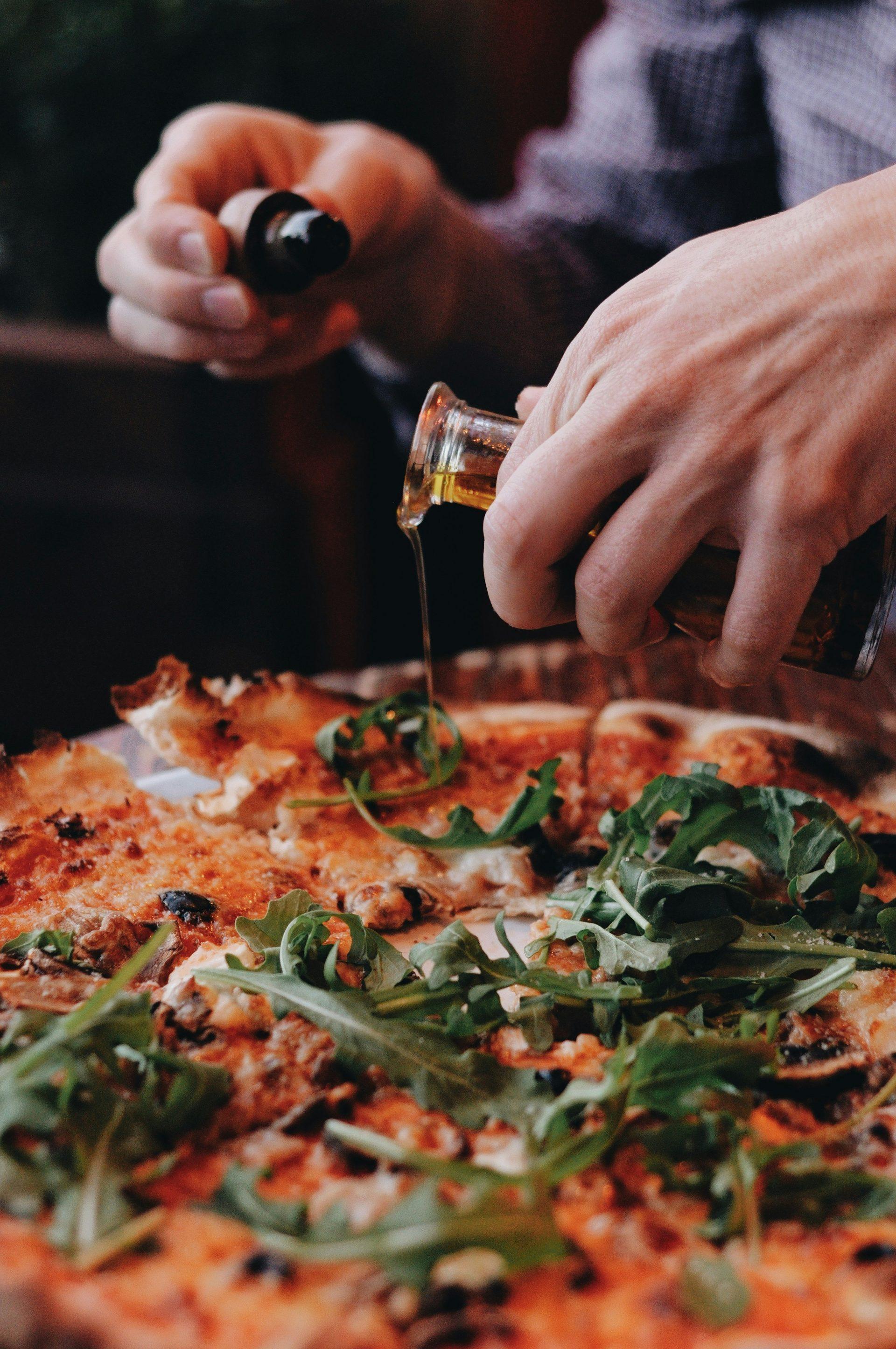
1Olive oil in pizza: two different moments
There are two ways in which olive oil interacts with pizza, and they have completely different effects:
- 1The oil in the dough: a tablespoon of EVOO in the dough is used for structure — it makes the crumb softer and helps the crust crisp up. Here, quality is less critical.
- 1The oil as a raw finisher (after exiting the oven): here, quality is essential — this is the oil you actually taste.
2At what temperature does your oil end up?
A pizza exits a wood-fired or stone deck oven at 300–450°C in the center. If you add the oil before baking, you are cooking it at extremely high temperatures — destroying all polyphenols and delicate aromas. It is a waste.
The correct technique: always apply olive oil out of the oven, on the finished and still-hot pizza.
3Which profile for which pizza
- Classic Margherita: medium fruity — the balance between tomato and mozzarella cannot handle extremes
- White pizza with mushrooms: medium-intense fruity — mushrooms have an earthy flavor that stands up to a bolder oil
- Marinara (garlic, tomato, oregano, no cheese): intense fruity — the robust ingredients want an oil with character
- Vegetarian/grilled veggie pizza: medium fruity
- Stuffed Calzone: a generous drizzle of medium fruity right out of the oven
4The quantity
Do not be afraid to use it: one generous swirl on the crust and across the surface while the pizza is still hot. The oil integrates with the residual warmth — it is at that exact moment that the pizza goes from good to memorable.